

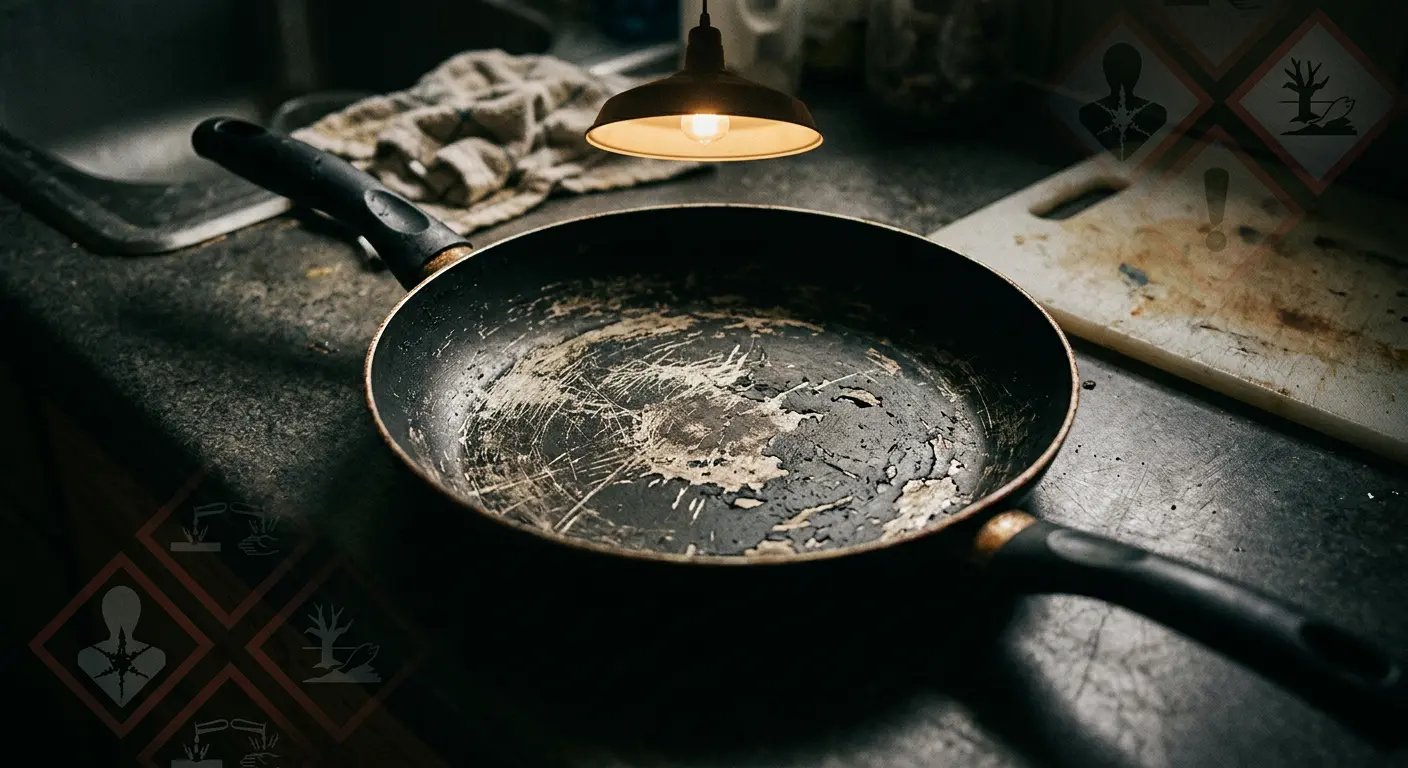
Before you cook your next meal, you need to read this. Because the pan sitting in your kitchen right now — the one you use to make eggs for your kids every morning — may be quietly releasing toxic chemicals into your food. Chemicals that never break down. Chemicals that are already inside your body.
They're called PFAS — per- and polyfluoroalkyl substances — and scientists have given them a terrifying nickname: "forever chemicals." The name isn't hyperbole. These synthetic compounds are so chemically stable that they persist in the environment for thousands of years. They're in our water supply, our soil, our blood — and they're coming from a source most people never suspect: the non-stick coating on everyday cookware.
"PFAS contamination is one of the most significant public health challenges of our generation. These chemicals don't degrade — they accumulate. And the primary exposure pathway for most families is through food contact materials, including cookware."
 — Dr. Linda Birnbaum, Former Director, National Institute of Environmental Health Sciences
When I first heard about PFAS, I did what most people do — I assumed it didn't apply to me. My pans were newer. They said "PFOA-free" right on the box. Surely that meant they were safe?
But the more I researched, the more disturbing the truth became. "PFOA-free" doesn't mean "PFAS-free." It simply means manufacturers swapped one dangerous chemical for another from the same toxic family. The industry knew. They just hoped you wouldn't find out.

Key Finding: A 2022 study published in Environmental Science & Technology found that PFAS chemicals were detected in the blood of 98% of Americans tested — with cookware identified as a major exposure source.
The "Forever Chemical" Scandal: How The Cookware Industry Poisoned A Planet
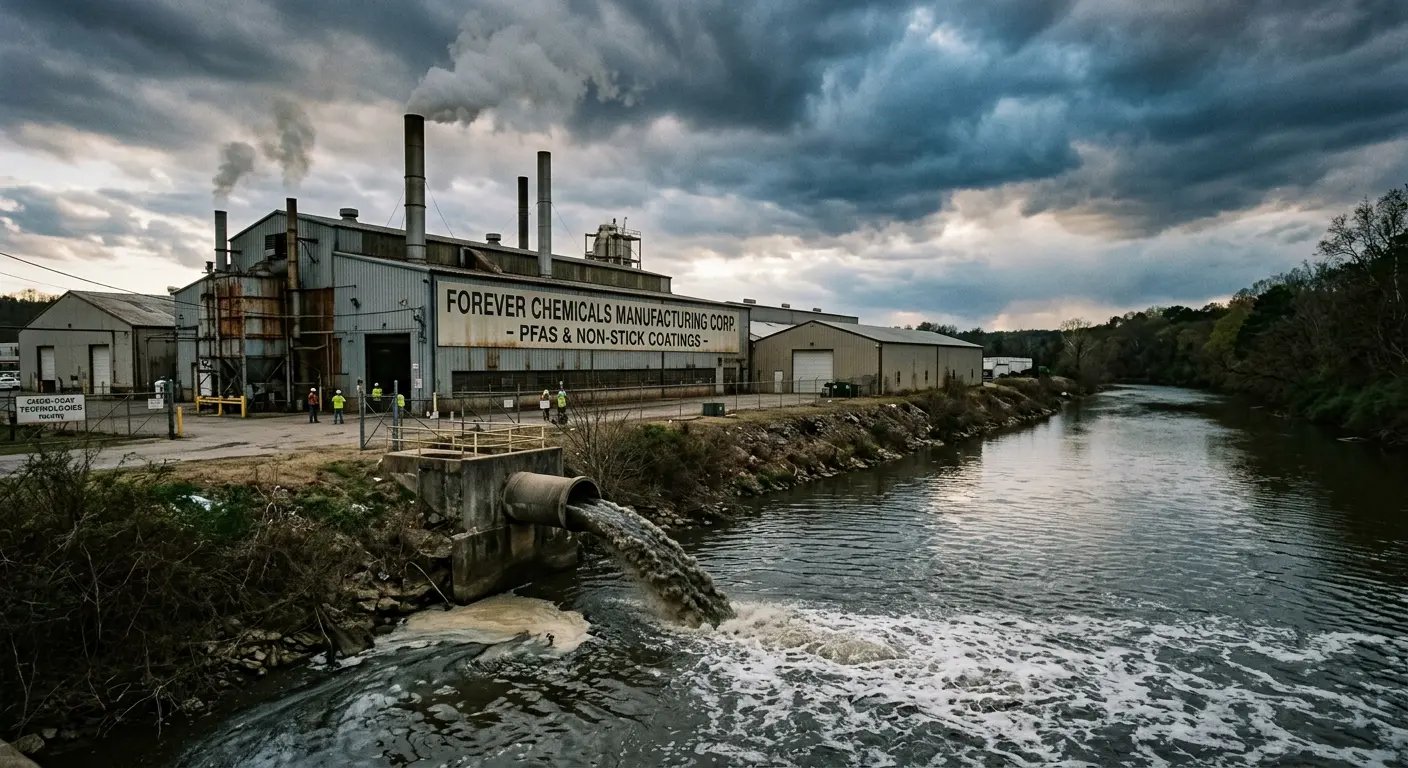
The story of PFAS in cookware reads like a corporate thriller. In the late 1990s, internal documents from major chemical manufacturers revealed they had known about the health risks of PFAS for decades — and actively concealed the evidence.
These chemicals were prized because they made surfaces slick and water-resistant — perfect for non-stick pans. But the same molecular properties that make them useful also make them virtually indestructible. Once released into the environment — or into your body — they don't go away.
The EPA has now linked PFAS exposure to:
- Increased risk of certain cancers (kidney, testicular, liver)
- Thyroid disease and hormonal disruption
- Weakened immune system response (including reduced vaccine efficacy)
- Reproductive issues and developmental delays in children
- Elevated cholesterol and cardiovascular complications
- Liver damage and metabolic disruption
"We're essentially running a massive, uncontrolled experiment on the American public. PFAS are in everything — our water, our food packaging, our cookware. The cumulative effect is what keeps toxicologists up at night."
— Dr. Arlene Blum, Executive Director, Green Science Policy Institute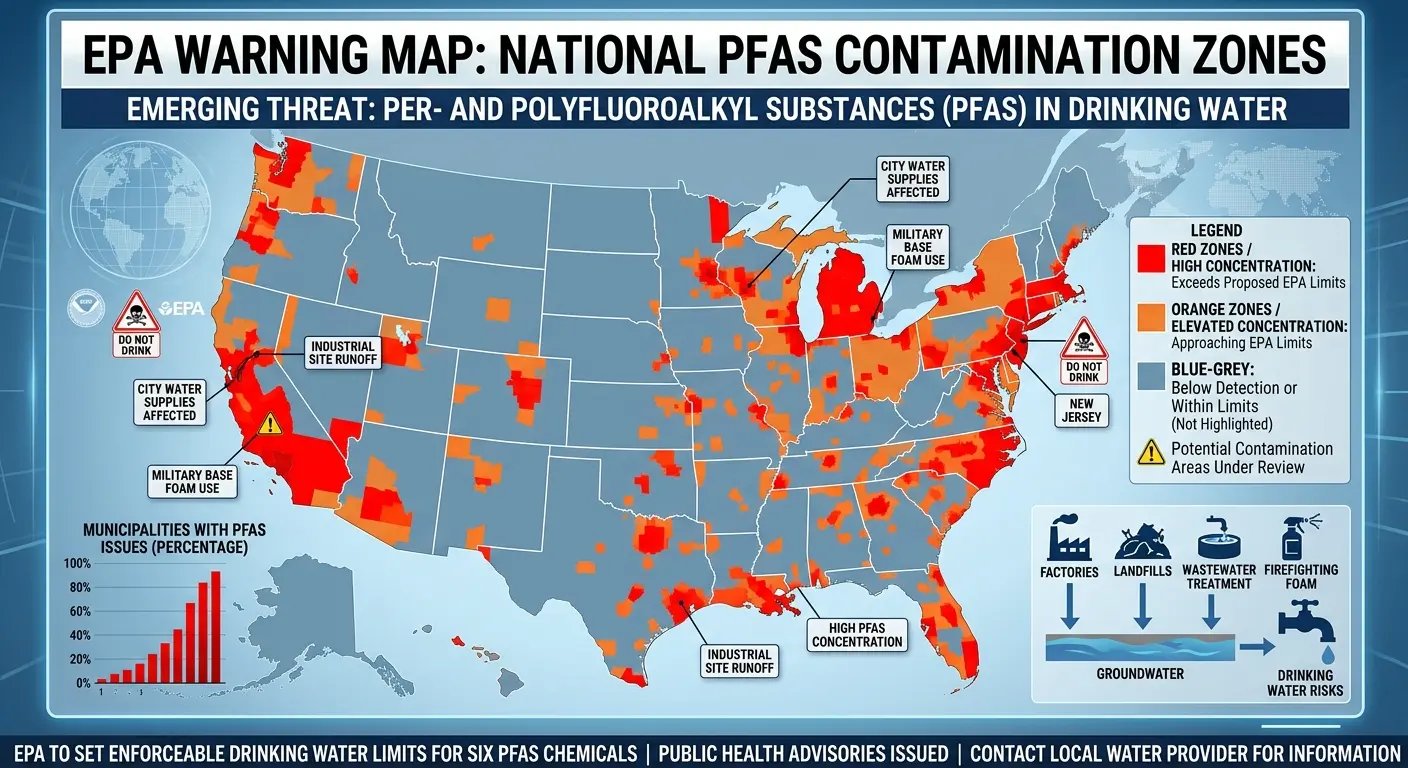
As of 2026, several U.S. states have already begun restricting or banning PFAS in food contact materials, including cookware. California, Maine, Minnesota, and Washington are leading the charge — with federal regulations expected to follow. When governments start banning something, it's a clear signal: the era of PFAS cookware is ending.
💡 The uncomfortable truth: If you have a non-stick pan in your kitchen right now — even a "PFOA-free" one — chances are it still contains PFAS chemicals from the same toxic family. And every time you heat it, scratch it, or wash it, those chemicals can transfer to your food.
Why "Safe" Alternatives Aren't As Safe As You Think

After learning about PFAS, most people's first instinct is to look for alternatives. I did the same. But what I discovered is that every conventional cookware material has a hidden compromise — and some are worse than others.
 Traditional Non-Stick: The PFAS Problem
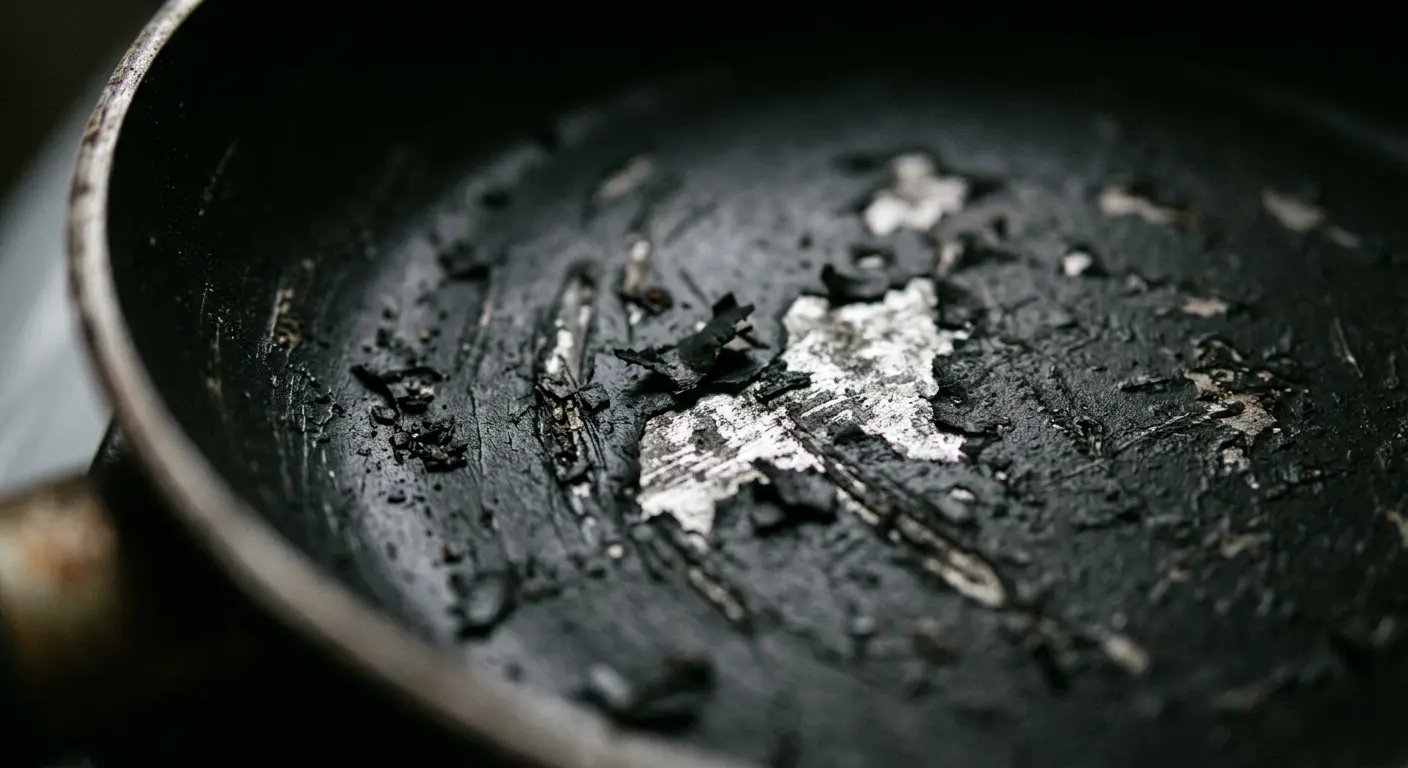
Even pans marketed as "PFOA-free" can contain other PFAS chemicals — GenX, PFBS, and dozens of lesser-known compounds from the same toxic family. The coating degrades with every use: heating, scratching, stacking, dishwashing. As the surface breaks down, PFAS microparticles migrate directly into your food. A single scratched pan can release over 2 million microplastic and chemical particles per cooking session. This isn't a future risk — it's happening every time you cook.
Ceramic Pans: The "Healthy" Alternative That Fails Fast
Ceramic cookware is marketed as the eco-friendly alternative, but it's still coated cookware — and coatings always degrade. Within 6-12 months, ceramic surfaces chip, crack, and lose their non-stick performance. Food starts sticking, you scrub harder, and the cycle accelerates. Those micro-abrasions create textured surfaces where bacteria can cling and biofilm can form. By the time you see visible damage, you've been cooking on a compromised surface for months. And then you replace it — again and again.
Stainless Steel: Durable But Reactive
Stainless steel avoids the coating problem, but it isn't chemically inert. Cooking acidic foods — tomatoes, vinegar, citrus — causes metal ions (nickel and chromium) to leach into food, especially from scratched or worn surfaces. One meal won't hurt you. But daily exposure over years? That's a different calculation. And despite what TV chefs claim, stainless steel is nowhere near as convenient as a true non-stick surface for everyday cooking.
Cast Iron: Traditional But Impractical
Cast iron is durable and time-tested, but it's porous, reactive, and high-maintenance. It requires regular seasoning, can rust if not dried properly, and reacts with acidic foods. The porous surface can harbor bacteria in microscopic crevices. Plus, at 8+ pounds per pan, most families simply don't reach for cast iron on a busy Tuesday night. It has its place — but it's not an everyday solution.
Here's what changed everything for me: the realization that PFAS don't just stay in your pan — they stay in everything. In your food. In your bloodstream. In your children's developing bodies. In the groundwater your community drinks from. These chemicals have contaminated the entire planet, and the single biggest thing you can do to reduce your family's exposure starts with what you cook on.
But is there actually a material that solves all of these problems? After months of research, only one answer kept coming up: Titanium.
Why Titanium Is Fundamentally Different
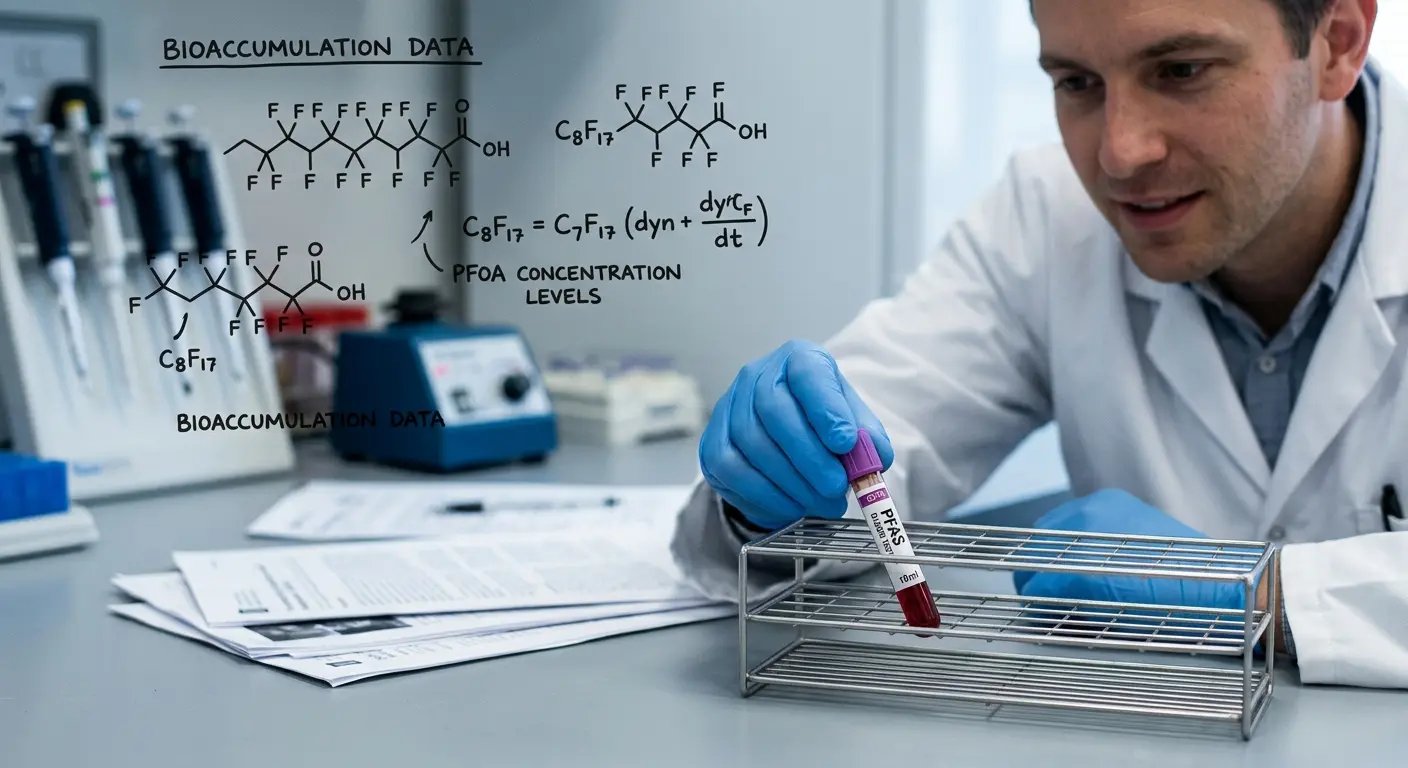
Titanium isn't a new coating, a marketing gimmick, or a "healthier version" of non-stick. It's an entirely different category of material — one that addresses every problem we've discussed.
Here's what most people don't know about titanium:
- 100% PFAS-free — no forever chemicals, no coatings, no synthetic compounds
- Biocompatible — the same material used in medical implants and surgical instruments
- Non-porous surface — bacteria and biofilm have nowhere to cling
- Chemically inert — doesn't react with acidic or alkaline foods
- Scratch-resistant — maintains performance even with metal utensils
- Naturally non-stick — when properly engineered, without any synthetic coating
"Titanium is one of the most biocompatible metals known to science. It doesn't corrode, doesn't leach, and doesn't react with biological tissue. There's a reason we put it inside human bodies — it's extraordinarily safe."
— Dr. Robert Langer, MIT Institute Professor, Chemical Engineering Editor's Recommendation
I Replaced All My Cookware with the Taima Pure Titanium Pan
If you search for "titanium pans" online, you'll notice something strange. Almost every pan claims to be titanium. But dig deeper and most are actually aluminum with a thin titanium coating, steel with titanium particles mixed in, or multi-layer composites containing only traces of titanium. They're not really titanium pans at all.
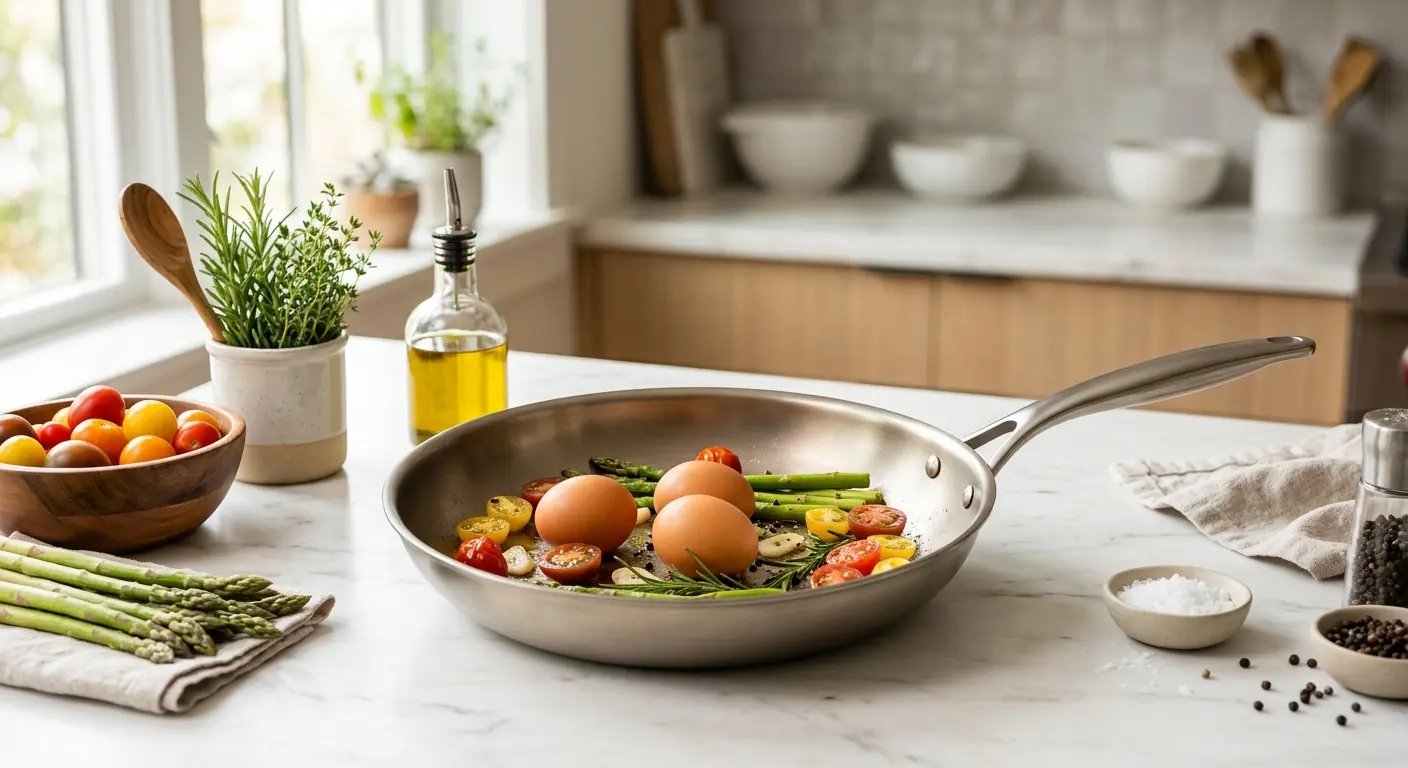
The Taima Pure Titanium Pan is fundamentally different. The cooking surface is made from certified Grade 1 pure titanium — one of the most stable, durable, and safe metals used in cookware manufacturing. No coatings. No PFAS. No compromises.
 Pure titanium cooking surface — zero coatings, zero PFAS, zero forever chemicals
 Extreme heat resistance — safe for stovetop, oven, and high-heat cooking
 Scratch-proof durability — metal utensils won't damage the surface
 Naturally non-stick performance — without synthetic coatings
 Induction compatible — works on all modern stovetops
 Built to last decades — not months, not years — decades
 READERS EXCLUSIVE: 50% OFF
 Free shipping · 30-day guarantee · Limited time offer
 4.9/5 Rating
 50,000+ Sold100% PFAS-Free
The Real Cost of "Cheap" Non-Stick Pans
I'll be honest — the Taima isn't the cheapest pan you can buy. At $174 (with the reader discount), it costs more than a $30 supermarket pan. But consider this:
Most non-stick cookware lasts 12 to 24 months before the coating begins to degrade and needs replacing. If you replace a $60 pan every year or two, over a decade you'll spend $400–$600 on disposable, PFAS-contaminated cookware — all while exposing your family to forever chemicals with every single meal.
The Taima is built to last decades. It's not disposable cookware — it's the last pan you'll ever need to buy. When you calculate the cost-per-year and factor in what you're not putting into your family's food, $174 isn't an expense. It's one of the smartest investments you can make.
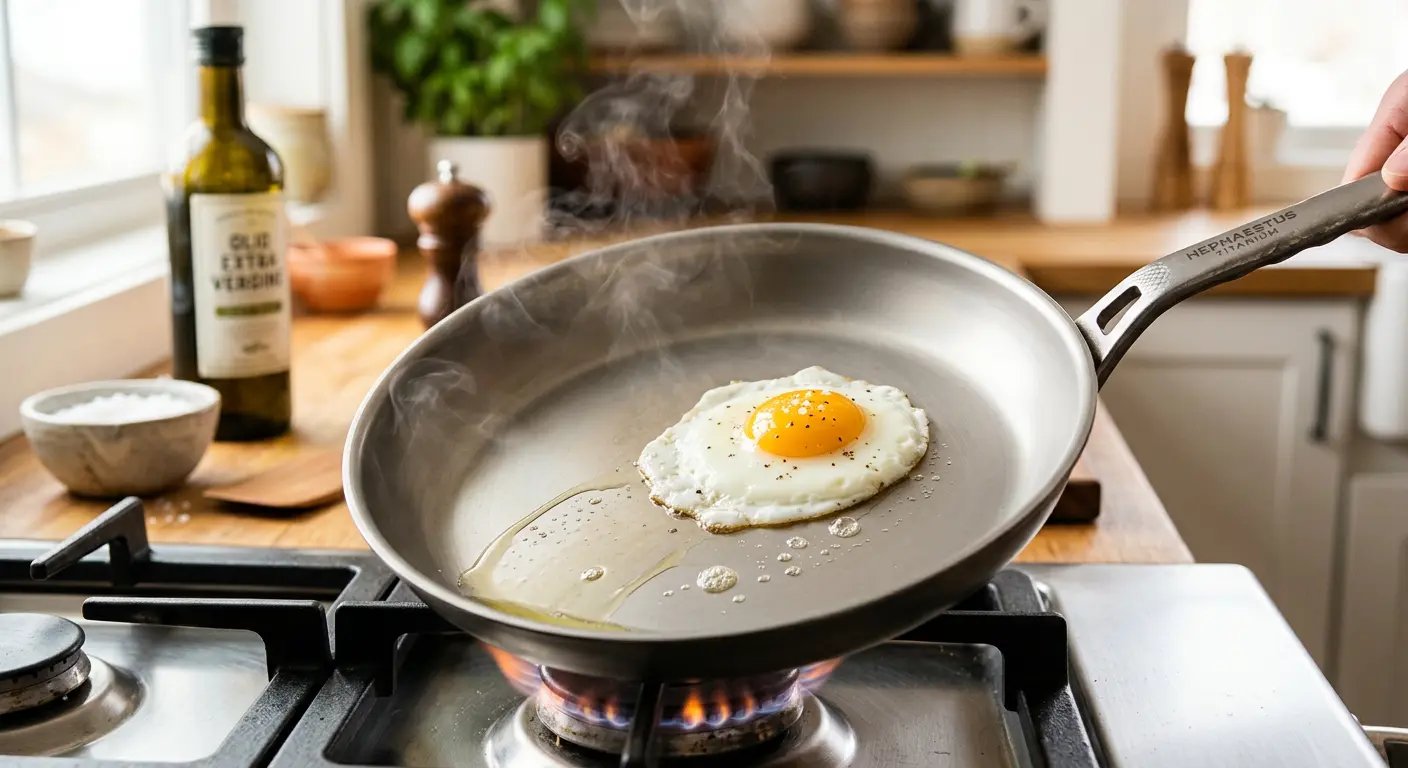
 Detoxify Your Entire Kitchen — Bundle & Save Over $1,000
Replace every PFAS-contaminated pan with pure titanium. Limited-time bundle pricing.
Everyday Bundle
Versatile Pan + Large Pan — covers 90% of daily cooking
$849$399Save $450Shop Everyday Bundle →
Complete Kitchen Set
3 Pans + 2 Pots — full kitchen replacement
$1,899$899Save $1,000+Shop Complete Set →
What Families Are Saying
Thousands have already made the switch from PFAS cookware to pure titanium.
 Verified Purchase
My old pan was literally flaking into our food
My old non-stick was flaking black chunks into our scrambled eggs — disgusting. This 12-inch size is perfect for family meals, and it actually stays slippery without all those sketchy chemicals. I don't have to worry about what my kids are eating anymore.
Verified Purchase110% recommend — my wife was right about PFAS
So my wife went down this whole rabbit hole about PFAS after watching a Netflix doc. I rolled my eyes at spending over $100 on a pan, but... damn. The thing actually works. My morning eggs just glide right off, and it doesn't smell funky when it gets hot like our old one did.
Verified PurchaseCooking is actually enjoyable again
Cooking with this pan is such a joy. The heat distribution is amazing, and I barely need to use any oil. It's made my cooking so much easier and healthier. No more worrying about what chemicals are leaching into our food. Worth every single penny.
Verified PurchaseThe perfect pan — period
Once I found out about forever chemicals being in basically everything, I had to do something about the one thing I could control — what I cook with. The Taima pan is flawless. Even heat, truly non-stick, and I feel good knowing there's nothing toxic touching our food.
 High demand — limited stock available at this price
This isn't about a trend. It's not about the latest kitchen gadget. It's about what touches your food every single day — and what ends up inside your family's bodies as a result.
PFAS have already contaminated the blood of nearly every American. They've poisoned waterways in all 50 states. They persist for thousands of years. And the biggest controllable source of exposure for most families? The cookware in your kitchen.
Thousands of Americans are already making the switch. They're replacing their PFAS-contaminated pans with pure titanium — not because it's trendy, but because once you know what's in your non-stick pan, you can't unknow it.
Make sure your family doesn't get left behind.
